
How To Read Your Property Tax Bill

As a property owner, it is essential to understand how to read a property tax bill.  Doing so will help you learn more about the way your property taxes are calculated and will ensure that you pay the correctamount on time.
  • LOOK CLOSELY AT YOUR TAX BILL AND CHECK FOR A NUMBER REFERRED TO AS THE PROPERTY INDEX NUMBER

    • It is usually listed towards the top portion of the bill and refers to the type and legal description of your property.  Make sure that this information is correct before proceeding with paying your property tax bill.
  • LOCATE THE OFFICIAL AMOUNT OF THE ASSESSED VALUE OF YOUR PROPERTY ON YOUR PROPERTY TAX BILL.

    • This amount is calculated by your local government, usually at the county level, and is based on the estimated value of both the building itself and the site or plot of land where the building is located.  This amount reflects the value that the assessor believes your property would sell for if put up for sale on the open market on the date of his assessment.
  • EXAMINE THE INFORMATION LISTED ABOUT THE TAXING DISTRICTS INCLUDED IN YOUR LOCAL GOVERNMENT’S CONSTITUENCY, WHICH WILL COLLECT A PORTION OF YOUR PROPERTY TAX PAYMENT.

    • This information is provided to give you an idea of how your tax money will be used by the local government to fund different areas of the community.  Usually, both the previous year’s tax rate and the current tax rate for each district will be listed, as well as the percentage of your total required payment that will go to each district.
  • INSPECT THE PAYMENT STUBS ATTACHED TO THE BOTTOM OF YOUR PROPERTY TAX BILL.

    • Each stub should include the official property index number assigned to your property, the amount of each payment installment required and the due date for each payment.  Read each stub carefully to make sure that the information listed appears to be correct, and then mark your calendar with each of the payment dates and the amount due on each date.
  • CONSULT A TAX LAWYER WITH ANY QUESTIONS THAT YOU MAY HAVE ABOUT HOW TO READ YOUR TAX BILL.

    • Find a lawyer who specializes in property tax and will be able to guide you through the payment process.  Though your lawyer will charge you a fee for these services, it is worthwhile to ensure that you are not being asked to pay more than should be required by your local government for your property.
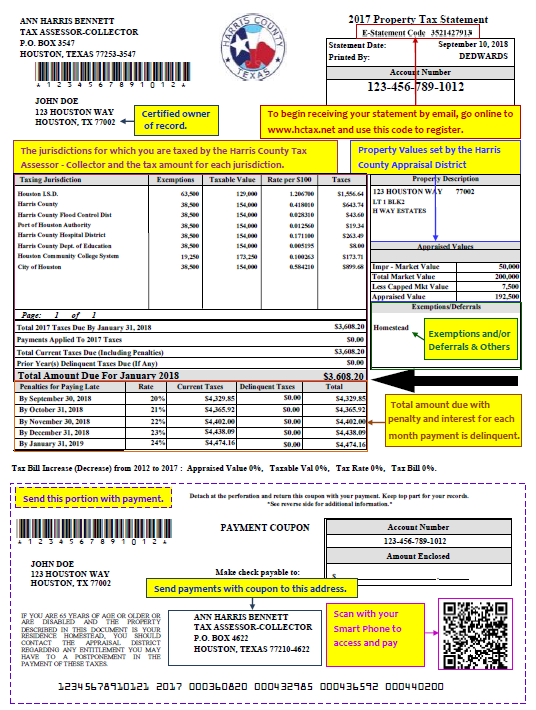
Property Tax Bill Explained
To find out if you are being fairly assessed, take at look at our Fairness Checker  on CutMyTaxes.com.  Its free and needs no personal information.

Comments

Popular posts from this blog

Cook County Residential Property Tax Reduction Made Simple

  Managing Cook County Illinois real estate taxes can be overwhelming, especially with rising assessments that often feel inaccurate or unfair. Fortunately, O’Connor offers a specialized service to help homeowners file a Cook County property tax appeal with confidence. Their proven strategy combines in-depth market analysis, property valuation reviews, and knowledge of local tax laws to identify opportunities for meaningful savings. Even if you have never filed before, O’Connor makes the process straightforward—handling research, paperwork, and negotiations on your behalf. This not only saves you time but also maximizes your chance of success. Whether your concern is affordability, fairness, or simply reducing unnecessary expenses, initiating a Cook County property tax protest with O’Connor ensures you have experts in your corner fighting for the lowest lawful tax burden.Take the first step toward lowering your property taxes today—visit https://www.poconnor.com/illinois/cook-count...

Cost Segregation Without a Physical Site Visit

No site inspection cost segregation allows property owners to access the benefits of depreciation acceleration without the need for an on-site engineering review. This streamlined approach leverages modern data sources, including architectural plans, photos, and property records, to classify assets accurately and comply with IRS standards. The primary advantage is efficiency: property owners can save time, reduce logistical challenges, and lower costs associated with a traditional site inspection while still obtaining a thorough and defensible cost segregation study. This method is particularly beneficial for investors managing multiple properties across different locations or for those with operational constraints that make physical visits difficult. By using a combination of remote data analysis and expert engineering insight, no site inspection studies can identify opportunities to reclassify building components into shorter-lived asset categories, unlocking significant tax saving...

Cook County Property Tax Reduction Services

Are you a residential property owner in Cook County, Illinois, struggling with high property taxes? The O'Connor property tax reduction service offers a risk-free solution. Their team of consultants, attorneys, and appraisers aggressively protests and appeals your property taxes on your behalf. You only pay if they are successful in reducing your tax burden, with no upfront fees, court costs, or appraisal fees. They handle all aspects of the appeal process, from negotiating with the Cook County Assessor to representing you before the Cook County Board of Review and the Illinois Property Tax Appeal Board. You can easily enroll online and let their experts work to lower your property taxes. To learn more and get started, visit their website: https://www.poconnor.com/illinois/cook-county-residential-property-tax-reduction/ "#CookCountypropertytaxappeal #cookcountyillinoisrealestatetaxes #CookCountypropertytaxprotest"